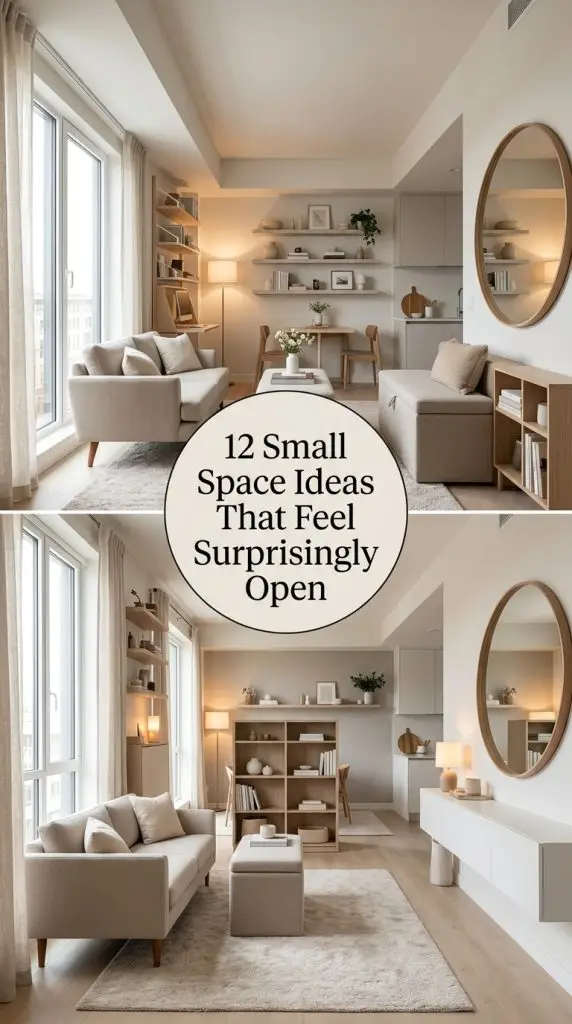
Living in a small home doesn’t have to feel cramped. With a few smart design choices, even the tiniest apartment or bedroom can feel airy, calm, and intentionally styled. Interior designers consistently point to one key principle: the more visual breathing room you create, the larger a space feels.
Here are 12 ideas that instantly make compact spaces feel bigger and more open.
1. Use Light, Continuous Colors
Soft whites, warm beige tones, pale grays, and muted earth colors reflect light and reduce visual breaks. Carrying one color palette across walls, trim, and even ceilings helps a room feel unified instead of chopped into sections.

2. Choose Furniture With Visible Legs
Bulky furniture that sits directly on the floor can visually weigh down a room. Sofas, chairs, and tables with exposed legs create the illusion of more floor space because your eye can travel underneath them.

3. Let Natural Light Stay the Star
Heavy curtains often make small rooms feel boxed in. Swap them for sheer panels or light linen drapes that let daylight spread through the room. Position seating or desks near windows so the eye naturally moves toward the brightest part of the space.

4. Add Mirrors Opposite Windows
A well-placed mirror can double the feeling of depth and bounce light around the room. Designers often recommend placing a large mirror directly across from a window to create an expanded view effect.

5. Think Vertical, Not Horizontal
Tall shelving, wall-mounted storage, and vertical paneling pull the eye upward and make ceilings feel higher. In small rooms, using wall height efficiently matters more than adding wider furniture.

6. Keep Walkways Clear
Rooms instantly feel larger when movement flows easily. Avoid blocking pathways with oversized furniture or crowded corners. Even shifting furniture a few inches away from the wall can create subtle “breathing room.”

7. Use Multi-Functional Furniture
A storage ottoman, fold-out desk, nesting tables, or a bed with drawers underneath reduces clutter while maximizing function. Pieces that do double duty prevent a small room from feeling overloaded.

8. Create Small “Zones”
Studio apartments and compact homes often feel chaotic when every activity happens in one visual field. Creating mini-zones for sleeping, working, or relaxing makes a space feel intentional instead of crowded. A rug, shelf, or curtain divider can subtly define areas without closing them off.

9. Layer Your Lighting
One harsh ceiling light can flatten a room. Instead, combine ambient lighting, table lamps, under-cabinet lighting, and warm accent lights to add dimension and depth. Corners that are softly illuminated tend to feel more expansive.

10. Limit Visual Clutter
Even beautiful decor can overwhelm a tiny space when there’s too much of it. Designers often recommend keeping countertops, shelves, and entryways intentionally sparse. Clear surfaces instantly create calm and openness.

11. Use Open Shelving Carefully
Open shelves can lighten a room visually, especially in kitchens, but only if they stay organized and minimal. A few neatly styled shelves feel airy; overcrowded shelves feel chaotic.

12. Leave Some Empty Space
One of the biggest mistakes in small homes is trying to fill every corner. Empty space is what gives a room its sense of openness. Leaving a wall partially bare or keeping one surface clutter-free can dramatically change how spacious a room feels.

Final Verdict
A small space can feel dramatically bigger without expensive renovations or major redesigns. The key is creating visual openness through light colors, smart furniture choices, better storage, and intentional simplicity. Even tiny changes — like adding mirrors, clearing clutter, or using vertical storage — can transform how a room feels. The best small spaces are not the ones with the most square footage, but the ones designed with balance, flow, and breathing room in mind.